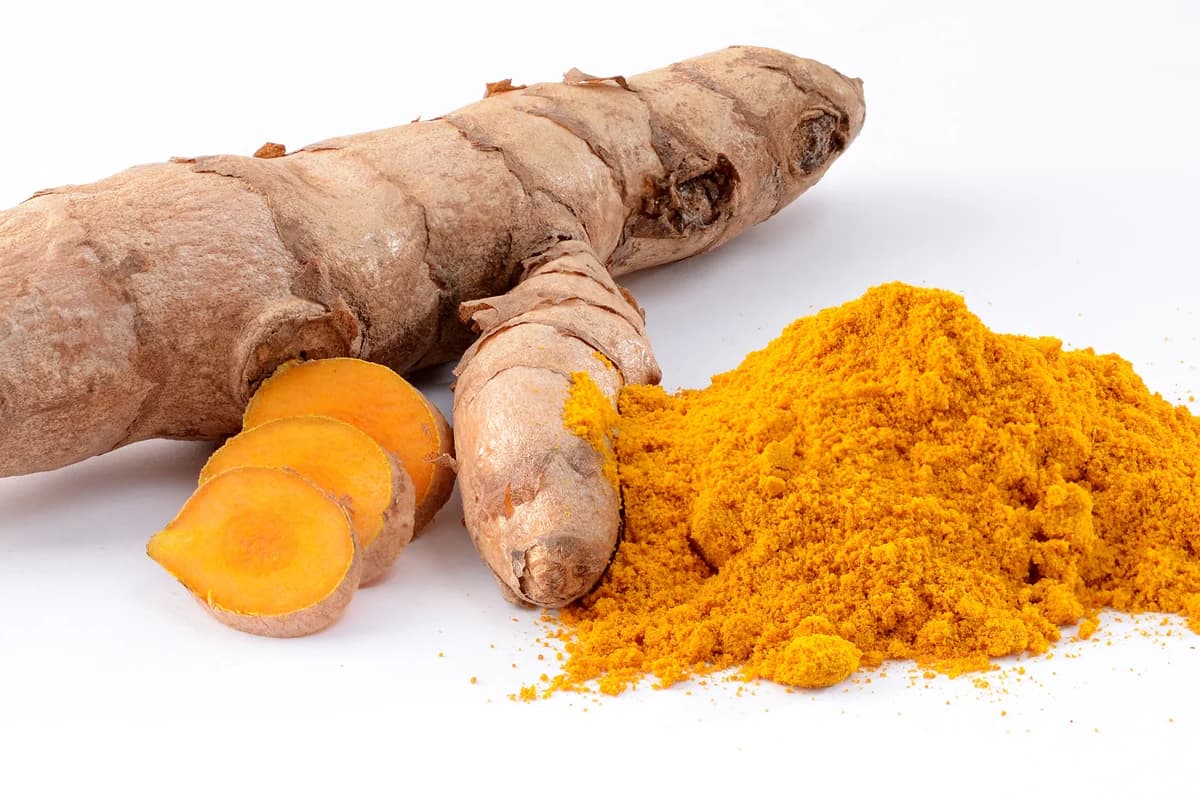
About This Plant
Turmeric (Curcuma longa L.) is a tropical rhizomatous perennial in the Zingiberaceae family, native to South and Southeast Asia. Plants reach 60-120 cm tall with broad, dark green leaves. Grown primarily for its bright orange-yellow rhizomes rich in curcumin (2-9%). Requires 7-10 months of warm weather (20-35 C) with high humidity. Nutrient demand follows K > N > P, with potassium critical during rhizome bulking. Fresh rhizome yield ranges 500-1000 g per plant. Thrives in USDA zones 8-11; suitable for container cultivation with minimum 30 cm soil depth.
How to Grow Turmeric
Learn how to grow Turmeric from seed to harvest in 270 days. Intermediate difficulty. Complete nutrient guide, pH/EC requirements, and growing conditions for soil & container.
Sources cited: 18.
Nutrient Requirements by Growth Stage
Turmeric is a K-dominant feeder: total nutrient uptake per plant is K 1492 mg > N 1199 mg > P 397 mg. During rhizome bulking (139-209 DAP), potassium demand peaks as stem K (420 mg at 139 DAP) is remobilized underground…
Sign in to view nutrient requirements
A free account unlocks NPK targets for all four growth stages, micronutrient levels, a per-stage nutrient calculator, and the full nutrition guide. Signing up takes one click. Truleaf is a free, non-profit project, and every new account helps it grow. No spam, ever.
Growing Environments
Turmeric grows successfully in multiple environments. Outdoors, it thrives in tropical and subtropical zones (USDA 8-11) with 7-10 months of frost-free weather…
Temperature
Turmeric thrives in warm conditions with an optimal growth temperature of 26-30 C. Rhizome sprouting requires 21-27 C soil temperature. Growth ceases below 15 C and the plant enters dormancy. The germination temperature range is 25-30 C. Night temperatures should not drop below 20 C during the vegetative phase. Leaf gas exchange and curcuminoid synthesis peak at 25-30 C; temperatures above 35 C reduce growth rate and curcumin content. Chintakovid et al. (2022) demonstrated that controlled temperature stress at 20 C significantly reduced shoot height and leaf area while increasing curcuminoid concentration in rhizomes as a stress response.
Humidity
Turmeric requires high ambient humidity of 70-90%, with 80% as the optimal target. Native to tropical monsoon regions of South and Southeast Asia, it performs poorly in arid conditions…
Light
Turmeric performs best under moderate to high light: DLI of 14-18 mol/m2/day, 12-14 hour photoperiod, and light intensity of 300-500 umol/m2/s. Hossain et al…
Airflow
Moderate air circulation is important to prevent foliar diseases, particularly leaf blotch and leaf spot. Provide gentle airflow of 0.3-0.8 m/s around the canopy…
Sign in to view environmental requirements
A free account unlocks exact temperature, humidity, light and airflow targets, including germination and growth ranges, DLI, photoperiod and PPFD, plus the full environment guide. Signing up takes one click. Truleaf is a free, non-profit project, and every new account helps it grow. No spam, ever.
Hydroponic System Compatibility
Turmeric performs best in drip irrigation and ebb-and-flow systems that support container-based soilless media. Drip with coco coir is excellent for precise nutrient delivery during the 9-month K-dominant feeding cycle…
Growing Media
Use loose, well-drained, organic-rich media with good aeration. Coco coir is preferred for container and hydroponic systems -- its water retention and fibrous structure support rhizome development…
Container Specs
Use containers at least 30 cm (12 in) deep and 30-46 cm (12-18 in) wide, with a minimum volume of 26 L (7 gal). Larger 38-57 L (10-15 gal) containers allow significantly better rhizome expansion…
Training & Support
No trellis, cage, or staking is needed. Turmeric pseudostems reach 90-120 cm (3-4 ft) but are self-supporting…
Sign in to view system compatibility
A free account unlocks why each of the six systems fits or fails, plus growing media, container sizes, training methods, companion plants, and the full systems guide. Signing up takes one click. Truleaf is a free, non-profit project, and every new account helps it grow. No spam, ever.
Propagation
Turmeric propagates exclusively by rhizome division. Select firm, disease-free rhizome pieces 2.5-7.5 cm (1-3 in) long with 2-3 visible buds each…
Harvesting
Harvest turmeric 8-10 months after planting (approximately 270 days) when foliage yellows and stems begin to fall over. The PeerJ phenological study tracked maturation through 209 DAP with total dry matter peaking at 195 DAP…
Planting Calendar
In temperate climates, pre-start rhizomes indoors in January-March on a heat mat at 21-27 C. Transplant outdoors after last frost when nights stay above 10 C and soil reaches 20 C, typically May-June…
Common Issues
The most serious threat is Pythium rhizome rot (P. aphanidermatum), causing mushy, water-soaked lesions with foul odor -- prevented by well-drained media, hot water seed treatment (50 C, 30 min), and Trichoderma inoculants…
Get the full science-backed guide
By signing up, you help keep Truleaf free and support the growth of our nonprofit project. Your account unlocks full details for every plant issue—including symptoms, causes, step-by-step solutions, and prevention—plus the month-by-month planting calendar, the complete guide, and all research sources. It only takes one click. No spam, ever.