Hydroponic Equipment List for Beginners: Buy Only What You Need
Use this hydroponic equipment list for beginners to buy baseline supplies, then add only what your Kratky, DWC, NFT, ebb and flow, or drip system needs.
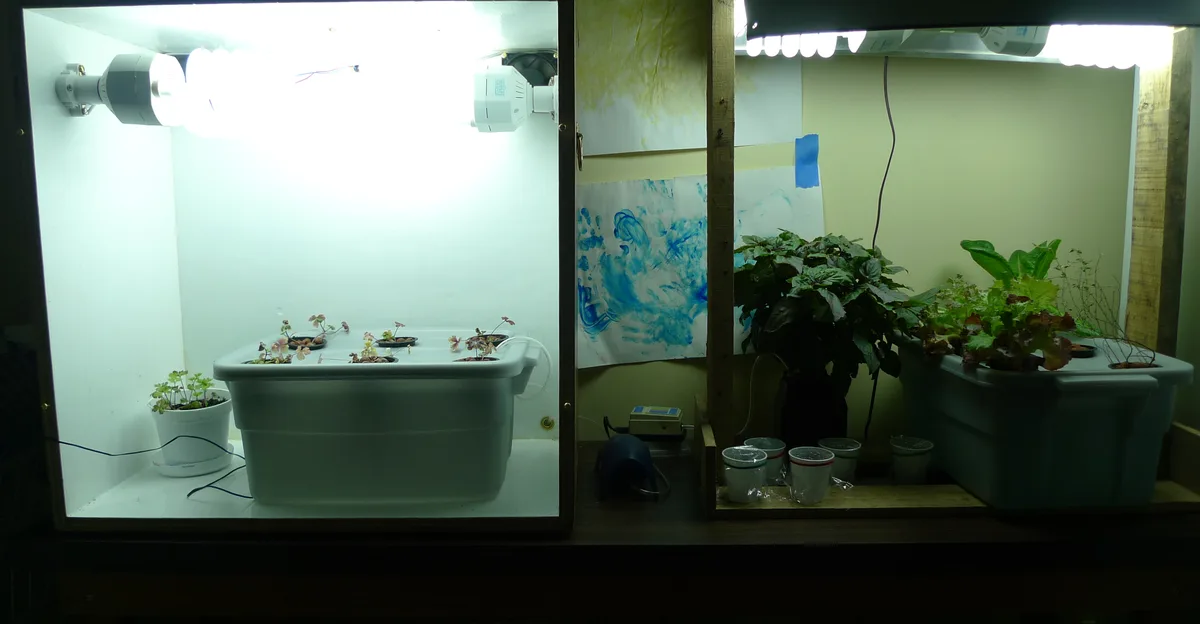
Key point: Choose your crop, system, and light source before you shop. Every beginner setup needs a clean solution container, water, complete hydroponic nutrients, plant support, a way to test pH, adequate light, and cleaning supplies. Pumps, air stones, timers, growing medium, net pots, grow lights, and EC meters depend on the method or become useful as the system grows.
A useful hydroponic equipment list for beginners should keep you from buying parts that belong to another method. A passive Kratky container can run without a pump or timer. Actively aerated Deep Water Culture (DWC) needs oxygenation. Nutrient Film Technique (NFT) needs a dependable delivery and return path. Ebb and flow needs a pump and timed flooding.
Your hydroponics shopping list at a glance
| Purchase tier | Buy now | Buy only if your system needs it | Add later |
|---|---|---|---|
| Plan | Crop and system choice; container volume; light source; access to water and power | Space for channels, trays, drainage, or air equipment | Automation plan |
| Baseline supplies | Covered reservoir or container; complete nutrients; plant holder; pH test method; measuring container; seeds or transplants; cleaning kit | Propagation supplies when needed; growing medium, net pots, raft, or system-specific lid | Extra meters and logging tools |
| System hardware | None until the method is chosen | Air pump, airline, air stone, water pump, timer, channels, tray, emitters, or return plumbing | Spare pump or alarm |
| Monitoring | pH test method | EC meter, thermometer, reservoir-level marker | Dissolved-oxygen meter, PAR meter, connected sensors, automated dosing |
| Light | Suitable sunlight or an indoor fixture | Grow-light timer and environmental controls for an indoor setup | Data logging and advanced climate controls |
This table separates the jobs your setup must perform from the parts used to perform them. A plant needs support, for example, but that support may be a raft, lid, basket, plug, or net pot. An indoor crop needs a suitable fixture, while a crop in a suitable sunny location may not.
If you have not chosen a method, compare the main options in our hydroponic systems guide before ordering hardware.
Start with five decisions, not a cart
Write down these details before choosing a reservoir, pump, or light:
- Crop: What will you grow, and how large will its roots and canopy become?
- System: Will the nutrient solution stay still, receive air, flow through channels, flood a tray, or travel through drip lines?
- Container volume: How much solution will the design hold, and how will you inspect its level?
- Light source: Will the plants receive suitable sunlight, or will you provide an indoor grow light?
- Power dependence: What stops working during an outage or pump failure?
If the crop choice is still open, browse potential crops in the Plant Database before settling on the system and equipment list.
Hydroponic methods differ in how they support roots, move nutrient solution, and supply oxygen. Those differences determine whether you need pumps, channels, air equipment, a timer, or growing medium.
Planning around one crop also makes the shopping list more precise. A small leafy crop and a large fruiting crop do not ask the same plant holder, spacing, container, or support system to do the same job. The retained evidence does not support one container size or equipment specification for all crops, so this checklist stays at the decision level rather than inventing universal dimensions.
The baseline equipment every setup must solve
1. A clean, covered solution container
Choose a reservoir or container made for appropriate contact with water and the materials you plan to use. It should be easy to inspect and clean. Its cover and plant openings should keep light away from the nutrient solution while still giving you safe access for checks and maintenance.
The form changes by system. A Kratky setup may use one covered vessel. A DWC system may use a bucket, tank, or pond with a lid or raft. NFT and ebb-and-flow systems use a separate reservoir connected to the growing area.
2. Water, a mixing container, and complete nutrients
You need a usable water source, a separate container or tool for measuring and mixing, and a complete hydroponic nutrient product suited to the crop or growth stage. Follow the nutrient label for mixing and handling. Avoid copying a brand-specific dose from a general equipment checklist.
Our hydroponic nutrients guide explains what a complete solution must provide. Use Nutrient Manager for product-specific amounts instead of hardcoding a dose into your shopping notes.
3. A plant holder and, when needed, growing medium
Roots need a stable way to meet the nutrient solution while the stem and leaves remain supported. Your method may use a lid, raft, basket, plug, net pot, or a container filled with growing medium.
Do not buy net pots and bags of medium by default. Some methods use both, while other designs use a different holder or little medium. If your system does use medium, compare the practical differences in our hydroponic growing media guide.
4. A pH test method and, when needed, labeled correction products
pH affects nutrient-solution management, so a way to test it belongs in the baseline budget. This can be a test kit or a suitable meter. If you buy a meter, include the calibration, cleaning, and storage supplies named in its instructions. If you use pH correction products, follow their labels and the nutrient manufacturer’s directions rather than improvising acid or base mixtures.
The retained sources use different pH targets and monitoring schedules for different crops and systems. Use our pH and EC management guide for the crop-specific operating question. A shopping checklist cannot supply one honest target for every reservoir.
5. Seeds or transplants and, when needed, propagation supplies
Start with seeds or transplants. Add propagation supplies only when the way you start the plant requires them. Depending on the method, that may include plugs, a small amount of inert medium, a tray, or another supported way to start the plant before it enters the system.
6. Adequate light
Light is a requirement, but a grow light is conditional. A suitable site may provide enough sunlight. Indoor growing usually shifts the purchase toward a fixture, hanging hardware, and a timer for the light schedule.
Do not choose a fixture from a universal watts-per-plant rule. Coverage depends on the crop, fixture, mounting height, and growing area. Use the fixture maker's coverage data to check those choices against your planned layout.
7. A cleaning kit
Add brushes or other tools that can reach the reservoir, tubing, trays, channels, and reusable plant holders in your design. Select cleaning and sanitizing products from the equipment maker’s and product label’s directions. Hydroponic equipment still needs cleaning, and the method does not make edible crops automatically free of food-safety risk.
Add only the hardware your system requires
Passive Kratky equipment list
The Kratky method uses a covered vessel and a falling nutrient-solution level. The design preserves a moist air-root zone above the remaining solution. Correctly designed non-circulating systems can grow a crop without a water pump, air pump, or timer.
Add these items to the baseline:
- A covered, light-excluding vessel sized for the crop and method
- A lid or plant holder that leaves room for the intended air-root zone
- Enough initial nutrient solution for the chosen design
- A visible or marked way to check the solution level without disturbing the roots
Do not add a pump because another checklist calls it essential. Adding active circulation creates a different equipment and failure plan. The passive method still needs correct vessel design, plant support, light exclusion, and solution management.
Actively aerated DWC equipment list
In actively aerated DWC, roots sit in a deep nutrient solution while the system deliberately supplies oxygen. A small setup commonly uses air equipment, while larger DWC or raft designs may use other pumping and oxygenation arrangements.
Add these items to the baseline:
- A reservoir, bucket, tank, or pond
- A lid, raft, or other plant holder
- An air pump, airline, and air stone, or another suitable oxygenation arrangement
- Any circulation hardware required by the chosen design
- A way to inspect solution level and equipment operation
A peer-reviewed lettuce experiment found that active aeration affected plant outcomes in its tested DWC setup. That experiment used one cultivar and a narrow set of oxygen conditions, so it supports deliberate aeration as an operating variable rather than one universal air-pump size or dissolved-oxygen target.
NFT system parts list
NFT is an active recirculating method. The nutrient solution travels from a reservoir through supported channels and returns for reuse. Roots in the channel depend on that delivery path, which makes pump operation and drainage part of the core design.
Add these items to the baseline:
- A reservoir
- Supported growing channels and plant holders
- A delivery pump
- Supply tubing or plumbing
- A collection and return path
- Fittings needed by the chosen channel design
- A way to inspect flow and respond to interruption
Do not treat NFT as pump-free or assume it can tolerate a long interruption. The exact pump and channel specifications must come from the size, lift, flow path, and instructions of the design you choose. The reviewed evidence does not support one pump rating for every NFT build.
Ebb-and-flow equipment list
An ebb-and-flow system pumps nutrient solution into a tray or plant containers, then lets it drain back to the reservoir. The method therefore needs both a flood path and a return path, along with timing suitable for that specific setup.
Add these items to the baseline:
- A flood tray or growing containers
- A system-appropriate growing medium
- A reservoir
- A pump
- A timer
- Fill, overflow, and drain fittings or plumbing
- A clear return route to the reservoir
The Oregon State guidance describes a timer as part of ebb-and-flow equipment. That does not make a timer universal across hydroponics.
Drip or media-system equipment list
A recirculating drip or media system sends nutrient solution from a reservoir to containers and gives the excess a drainage or return route. Designs vary in emitter type, growing medium, and whether irrigation runs continuously or in cycles.
Add these items to the baseline:
- Growing containers and a suitable growing medium
- A reservoir
- A pump
- Supply line and emitters
- Drainage or recirculation plumbing
- A timer when the chosen design uses cycles
Choose emitters, medium, and timing from a documented design for your crop and scale. The reviewed evidence does not support one combination for every drip setup.
System Build-Sheet and Compatibility Check
Turn your system choice into a connection plan before comparing products. This catches a common shopping problem: every part looks useful on its own, but the parts do not form a complete delivery, return, support, and access path when assembled.
Start with one row for each job in your design:
| System job | Your planned part | What it connects to | What to verify before purchase |
|---|---|---|---|
| Hold nutrient solution | Lid, raft, pump line, or return line | Material suitability, usable access, cover, and stated capacity | |
| Support the plant | Lid, raft, channel, tray, or container | Opening, holder, plug, and growing-medium compatibility | |
| Deliver solution | Reservoir, supply line, channel, tray, or emitter | Connection type, lift and flow requirements, and manufacturer instructions | |
| Return or drain solution | Channel, tray, container, and reservoir | Continuous fall or drain path, fitting compatibility, and cleaning access | |
| Supply oxygen | Reservoir, airline, air stone, or other system hardware | Whether the chosen method needs active oxygenation and how the design provides it | |
| Control timing | Pump, light, or other timed device | Electrical rating, schedule function, and safe location | |
| Measure conditions | Nutrient solution and calibration supplies | Range, units, care supplies, and replacement standards | |
| Clean reusable parts | Reservoir, tubing, holders, channels, and trays | Whether each wet surface can be reached, removed, flushed, or brushed |
The delivery and oxygen rows should change with the method. Passive Kratky has no pumped delivery path in a correctly designed vessel. Actively aerated DWC needs a deliberate oxygenation arrangement. NFT needs a working supply and return path, while ebb and flow needs timed delivery and drainage.
Check every interface
For each connection, write down the exact product or design on both sides. A line that fits a pump outlet may still need a separate fitting to meet a channel or tray. A plant holder may fit the lid opening but not the propagation plug. A timer may control the intended device but still be unsuitable for its load or location.
Use this short interface record:
Part A | Part B | direct fit or adapter | size or model reference | support needed | access for cleaning | source checked
Use manufacturer documentation for product-specific dimensions, electrical ratings, installation limits, and care requirements. The research behind this article defines the jobs each hydroponic method must perform; it does not verify that two retail products fit each other.
Add a failure-response row for powered parts
Record what depends on each pump, timer, or powered control. Then note how you would notice a stop and what safe response the design allows. This matters most when circulation failure can interrupt nutrient delivery or expose roots, as it can in NFT and other active systems.
| Powered part | What depends on it | Visible sign of a stop | Planned response | Spare or alarm |
|---|---|---|---|---|
Keep unsupported universal ratings out of the sheet. Choose pump capacity, channel layout, air equipment, light coverage, and container volume from the crop, scale, physical layout, and documented system design. The completed sheet should show a closed path through the system and a reason for every purchase.
What to measure now and what can wait
Put pH testing in the first purchase
A small system can begin with a suitable pH test kit or meter. If you choose a meter, budget for its required calibration, cleaning, and storage supplies at the same time. The meter is incomplete as a working purchase if you cannot maintain it according to its instructions.
Strongly consider an EC meter for recirculating systems
Electrical conductivity (EC) is a measure of the nutrient solution’s overall ionic concentration. It does not identify individual nutrients or diagnose a specific deficiency. An EC meter is strongly recommended when you recirculate solution or adjust it repeatedly because it gives you a consistent way to track overall nutrient strength.
A simple home setup may begin with a complete nutrient product, its labeled directions, and low-cost pH testing. That is why this list does not call an expensive EC meter universal. If you buy one, add its calibration and care supplies and learn what the reading can and cannot tell you.
Useful reliability purchases
A nutrient-solution thermometer and a clear reservoir-level mark can help you notice changing conditions or water loss. Powered systems also need a response to interruption. Depending on the design, that may mean a spare pump, an alarm, or inspection frequent enough for the system’s tolerance.
The research sources disagree on one universal monitoring schedule. Commercial guidance calls for closer checks than some simple small-scale examples. Set your routine from the system volume, crop, water source, growth stage, and the speed at which a failed pump can expose or deprive roots.
Leave advanced instruments for later
Automated dosing, connected sensors, dissolved-oxygen meters, photosynthetically active radiation (PAR) meters, climate controls, and data logging can answer narrower management questions. The reviewed evidence does not support presenting them as first-purchase requirements for a small beginner system.
Plan for water, electricity, and cleaning
Water and powered equipment share the same workspace in many hydroponic systems. The U.S. Consumer Product Safety Commission advises ground-fault circuit interrupter (GFCI) protection for electrical equipment used near water. Use equipment suitable for its location, keep plugs and connections away from splash, follow product instructions and local electrical rules, and hire a qualified electrician when the installation requires electrical work.
OSHA’s cited wet-location rules govern workplaces, so they do not define every home grower’s legal duties. They support the general principle that equipment and receptacles must suit damp or wet conditions. The CPSC source is the consumer-facing basis for the GFCI advice.
Cleaning access belongs in the design too. Check whether you can reach the reservoir walls, remove reusable holders, flush or brush lines, and drain the system without spilling water around electrical connections. Follow labeled directions for any cleaning or sanitizing product.
Commissioning and Maintenance Protocol
Commissioning is the check between assembly and adding plants. It gives you a clean baseline for flow, drainage, access, meters, and powered equipment. Follow the instructions for every product and system component throughout the process.
1. Inspect the dry assembly
Confirm that the reservoir or container is covered, plant holders are stable, tubing and fittings are supported, and the supply and return routes match the design. Make sure you can reach wet surfaces for later cleaning. Keep plugs, connections, and controls away from likely splash, and resolve any electrical-location question before adding water.
2. Run a water-only check
For an active system, observe the complete route from the reservoir to the growing area and back again. Look for leaks, loose connections, trapped drainage, unstable channels or trays, and places where water can approach electrical equipment. For a passive Kratky vessel, check the cover, plant opening, access point, and the planned way to observe the falling solution level.
Do not use this check to invent a universal flow rate or flood schedule. Compare the observed operation with the documented design and the component maker's instructions.
3. Prepare the monitoring tools
Identify each meter's units and complete the calibration, cleaning, and storage steps in its manual. Label calibration and storage solutions so they cannot be confused with nutrient or pH correction products. Record the meter model, the standard used, and the date. pH and EC are different measurements, and an EC reading cannot identify individual nutrients.
4. Mix and record the first nutrient solution
Follow the nutrient label and product instructions. Record the water source, nutrient product, crop and stage, solution volume, and initial pH. Add EC when it is part of your management plan. Use Nutrient Manager for product-specific amounts rather than copying an unverified dose into the log.
Keep these readings and crop observations in the Plant Diary if you use Truleaf for the grow.
5. Set a maintenance trigger for each component
Use manufacturer instructions and your system's behavior to decide when to inspect, clean, calibrate, or replace each item. The reviewed sources do not support one maintenance interval for every setup. A compact log keeps the decision visible:
| Component | What you check | Trigger or instruction source | Last action | Next check | Replacement kept |
|---|---|---|---|---|---|
| Reservoir or container | Cover, level, residue, and access | ||||
| Pump and delivery path | Operation, flow, fittings, and blockage | ||||
| Return or drainage path | Free drainage and leaks | ||||
| Air equipment | Operation, airline, and air delivery | ||||
| pH or EC meter | Calibration, cleaning, and storage | ||||
| Reusable plant holders | Cleanable surfaces and condition |
Keep the first completed record as the system baseline. Later checks become more useful when you can compare them with the same components, meter units, and observation points. If you change a pump, line, holder, meter, or container, update the build-sheet and repeat the relevant commissioning checks.
Printable beginner hydroponic setup checklist
Fill in the first five lines before you place an order:
- Crop: ______________________________
- System: Kratky / active DWC / NFT / ebb and flow / drip / other
- Container or reservoir volume: ______________________________
- Light source: suitable sunlight / indoor grow light
- Powered components and failure response: ______________________________
Buy now
- Clean, covered solution container or reservoir
- Usable water source
- Separate measuring or mixing container
- Complete hydroponic nutrient product for the crop or stage
- System-appropriate plant holder
- pH test kit or meter
- Labeled pH correction products, if required by your water and nutrient plan
- Calibration, cleaning, and storage supplies for any meter
- Seeds or transplants
- Suitable sunlight or an indoor grow light
- Cleaning tools that can reach every reusable wet surface
Only for my system
- Propagation plugs, tray, or medium, if the starting method requires them
- Growing medium
- Net pots, raft, lid, baskets, plugs, or other holders
- Air pump, airline, and air stone for actively aerated DWC
- Water pump for NFT, ebb and flow, or a powered drip design
- Timer for ebb and flow, lighting, or another timed component
- Channels, tray, containers, emitters, and required fittings
- Supply, overflow, drain, and return plumbing
- GFCI-protected electrical supply and location-suitable powered equipment
Recommended for monitoring and reliability
- EC meter for a recirculating or frequently adjusted solution
- EC calibration and care supplies
- Nutrient-solution thermometer
- Reservoir-level mark or gauge
- Spare pump, alarm, or written inspection plan for powered circulation
Later upgrades
- Automated dosing
- Connected sensors and data logging
- Dissolved-oxygen meter
- PAR meter
- Advanced climate controls
Your final list should let you explain what each item does in your chosen method. If you cannot connect a part to plant support, nutrient delivery, oxygenation, light, monitoring, cleaning, or safe operation, leave it out until the design calls for it.
Frequently asked questions
What equipment do you need for hydroponics?
Every setup must solve the same baseline jobs: hold a clean nutrient solution away from light, support the plant, provide complete nutrients and adequate light, allow pH testing, and permit cleaning. The parts that solve those jobs vary by system. Pumps, air stones, timers, growing medium, net pots, grow lights, and EC meters are conditional rather than universal.
Can you start hydroponics without a pump?
Yes. A correctly designed passive Kratky system can operate without a water pump, air pump, or electricity. Its vessel and falling solution level must preserve the intended air-root zone, so removing the pump does not remove the need for sound system design.
Do you need an air pump for hydroponics?
An air pump is part of many actively aerated DWC setups, but it is not universal. Passive Kratky systems can run without one. NFT and ebb-and-flow systems use different circulation hardware.
Do you need a grow light?
You need adequate light. You need a grow light when the growing location cannot supply suitable sunlight for the crop. Fixture choice and coverage should match the crop, area, and mounting plan.
Is an EC meter essential for beginners?
An EC meter is strongly recommended for recirculating or frequently adjusted nutrient solutions, but it is not a universal first purchase for every small passive setup. It reports overall ionic concentration and cannot identify individual nutrient levels.
How much does beginner hydroponic equipment cost?
This research pass did not verify current retail prices across regions, so the checklist does not promise a fixed budget. Price the baseline and your system branch close to purchase, then compare products by required function, compatibility, care supplies, and warranty rather than an unverified budget hook.