Passive Hydroponics: 4 Proven Methods — No Pumps, Under $20
Explore 4 proven passive hydroponic methods — Kratky, wick, semi-hydro (LECA), and hempy buckets. No pumps, no electricity, under $20. Science-backed guide with academic sources.
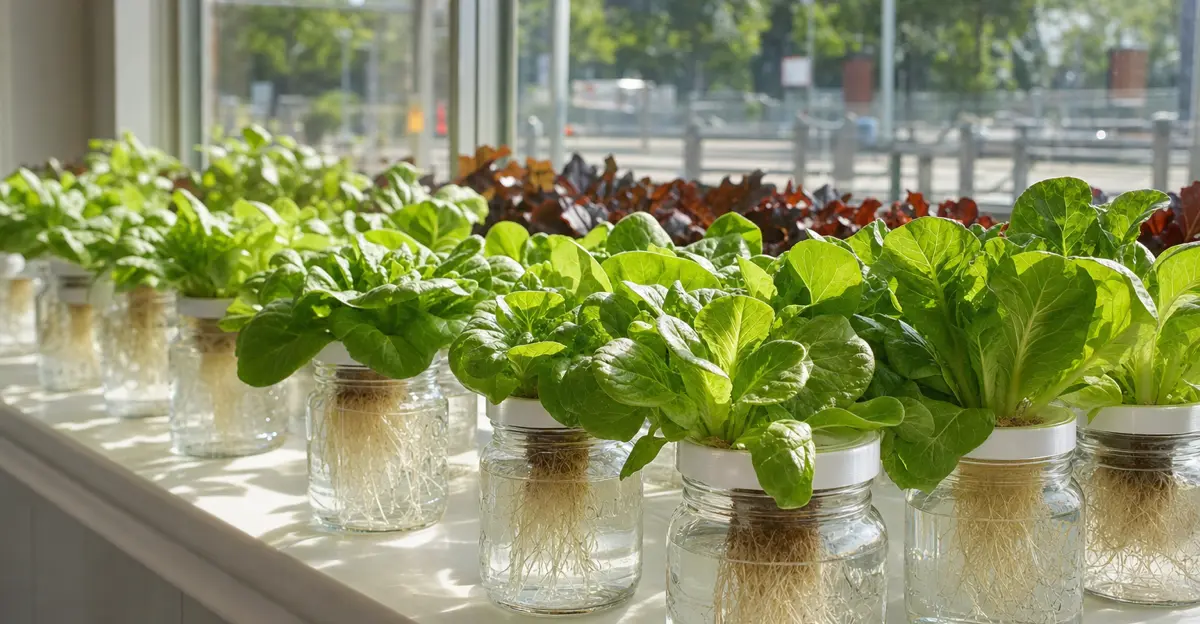
Key takeaway: Passive hydroponics grows plants in nutrient solution without pumps, electricity, or moving parts. Four proven methods — Kratky, wick, semi-hydro (LECA), and hempy bucket — all rely on capillary action or static solution to deliver water and nutrients to roots. Total setup cost: under $20. Dr. Bernard Kratky's research at the University of Hawaii demonstrated that non-circulating systems produce commercial-quality lettuce with no aeration or circulation whatsoever.
What Is Passive Hydroponics?
Passive hydroponics is any soilless growing method that delivers nutrient solution to plant roots without mechanical pumps, air stones, or electricity. Instead of circulating water through pipes or channels, passive systems rely on natural forces — capillary action, gravity, and osmotic pressure — to move nutrients where roots can absorb them.
The concept is not new. Dr. Bernard A. Kratky, a researcher at the University of Hawaii's College of Tropical Agriculture and Human Resources (CTAHR), published foundational work on non-circulating hydroponics starting in 2004. His research proved that lettuce could reach commercial quality in static nutrient solution with no aeration — overturning the long-held assumption that hydroponic roots need mechanically delivered oxygen.
A 2023 review in Bioinformation identifies passive systems such as the wick method and Kratky method as distinct hydroponic approaches that require "no electronic devices" and "no electric current to operate," making them practical for basic cultivation without automation.
The result is a class of growing systems that are cheaper, quieter, and simpler than anything involving a pump — while still producing meaningful harvests of herbs, leafy greens, and some fruiting crops.
Passive vs Active Hydroponics
The core trade-off is simplicity versus speed. Passive systems eliminate pumps and electricity, which removes failure points and running costs. Active systems circulate and oxygenate solution continuously, which accelerates root development and supports larger plants.
| Feature | Passive Systems | Active Systems (DWC, NFT, Ebb & Flow) |
|---|---|---|
| Electricity required | No | Yes |
| Setup cost | $10–30 | $60–200+ |
| Moving parts | None | Pumps, air stones, timers |
| Noise | Silent | Pump hum |
| Maintenance | Check 1–2x/week | Monitor daily |
| Growth speed | Moderate | Faster (higher yields reported in circulating systems) |
| Best crops | Herbs, leafy greens, small plants | All crops including large fruiting plants |
| Failure risk | Very low (nothing to break) | Medium (pump failure = root damage in hours) |
| Scalability | Limited to small/medium setups | High (commercial farms run active systems) |
When to choose passive
- You are a beginner and want zero risk of equipment failure.
- You grow herbs, lettuce, or houseplants in small quantities.
- You want a system that runs during power outages.
- Your budget is under $30.
- You value silence (apartments, bedrooms, offices).
When active is better
- You grow fruiting crops (tomatoes, peppers, cucumbers) that need sustained oxygenation.
- You want maximum growth rate and yield density.
- You are scaling beyond 10–15 plant sites.
- You need precise, automated pH and EC management.
Types of Passive Hydroponic Systems
Four methods dominate passive hydroponics. Each uses a different mechanism to get nutrient solution to roots without a pump.
Kratky Method
The Kratky method is a static-solution technique where a plant sits in a net pot above a container of nutrient solution. As the plant drinks, the water level drops, creating a moist air gap where roots absorb oxygen directly. No wicks, no medium (beyond a small amount to anchor the plant), no circulation.
Dr. Kratky's 2009 paper in Acta Horticulturae described three non-circulating methods at different scales: a bottle method (seedling in a net pot placed in a darkened 4-liter bottle), a covered-tank method (net pots in a polystyrene cover over a lined tank), and a float-support method (net pots in polystyrene sheets floating on raceway tanks). The small-scale bottle version — a seedling in a net pot resting on a container — became the one home growers adopted worldwide because of its simplicity.
Best for: Lettuce, herbs, leafy greens. Dr. Kratky also published research showing tomatoes can grow this way in 5-gallon buckets, though with more hands-on management.
Cost: $5–15 for a single mason jar setup.
We have a full deep-dive on this method: The Kratky Method: How Passive Hydroponics Works and Why Beginners Love It.
Wick System
A wick system uses absorbent strips — cotton rope, nylon cord, or felt — to draw nutrient solution from a reservoir up into a growing medium where roots are embedded. The wick acts as a passive pump, moving liquid through capillary action.
A 2016 study in the Journal of Plant Nutrition by Ferrarezi and Testezlaf evaluated wick irrigation systems for lettuce production. They found that wick-based self-compensating troughs with pine bark or coconut coir substrates produced comparable results to nutrient film technique (NFT) for greenhouse lettuce, demonstrating that passive wicking is a viable alternative to pump-driven delivery.
How it works:
- A reservoir sits below the plant container.
- One or more wicks run from the reservoir up through the bottom of the pot into the growing medium.
- Capillary action pulls solution upward continuously, keeping the medium moist.
- Roots grow into the moist medium and absorb nutrients on demand.
Limitations: The maximum effective wicking height is typically 30–45 cm (12–18 inches). Beyond that, capillary forces cannot overcome gravity reliably. This limits wick systems to small plants. Salt buildup in the upper medium is also a known issue — unlike active systems where circulation prevents localized accumulation, wick systems can concentrate salts near the surface over time.
Best for: Small herbs, lettuce, seedlings, and classroom/educational setups.
Cost: $10–20 including container, wicks, and medium.
Semi-Hydroponics (LECA)
Semi-hydroponics uses lightweight expanded clay aggregate (LECA) — porous ceramic balls fired at approximately 1,200°C — as a growing medium in a pot with a small reservoir at the bottom. The LECA wicks moisture upward through its porous structure while maintaining air pockets around the roots.
LECA's physical properties make it well-suited to passive growing. The spherical shape provides consistent aeration at the root level. The internal pore structure absorbs and holds water, releasing it gradually. And because LECA is inorganic, it does not decompose, compact, or harbor pathogens the way organic substrates can — it can be sterilized and reused indefinitely.
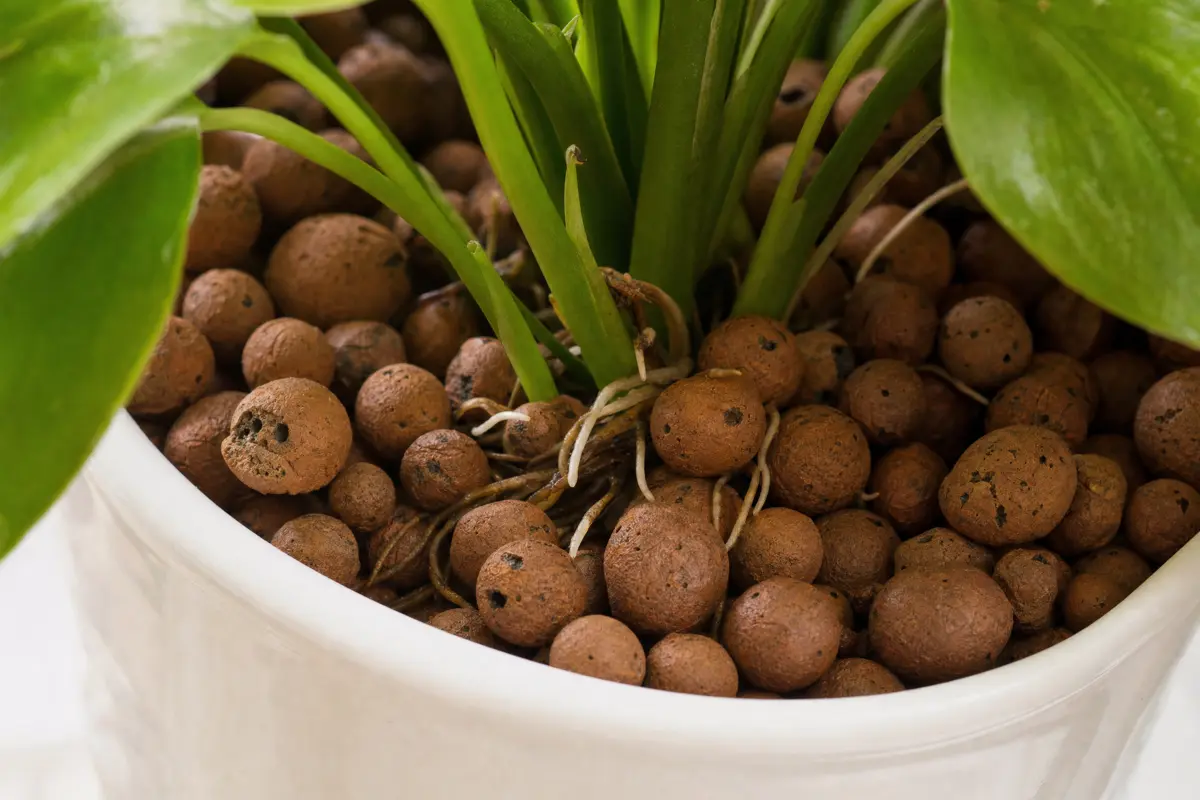
How it works:
- A cache pot or outer container holds 2–3 cm (1 inch) of nutrient solution at the bottom.
- An inner net pot filled with LECA sits inside, with its base just touching the solution.
- LECA balls wick moisture upward through capillary action.
- Roots grow around and between the clay balls, accessing both moisture and air.
- When the reservoir empties, you refill it — typically every 5–10 days depending on plant size.
Best for: Houseplants (especially orchids, pothos, monsteras), herbs, and any plant that benefits from consistent moisture without waterlogging. Semi-hydro has become extremely popular in the indoor plant community for exactly this reason.
Cost: $15–25 for LECA, net pots, and cache pots. LECA is reusable, so long-term costs are near zero.
Hempy Bucket
The hempy bucket bridges passive and active approaches. It is a container filled with an inert medium — typically a 3:1 mix of perlite and vermiculite — with a drain hole drilled 5 cm (2 inches) above the base. This creates a small permanent reservoir at the bottom while allowing the upper medium to experience wet-dry cycles.
How it works:
- You fill a 5-gallon bucket with perlite/vermiculite mix.
- A drain hole 5 cm from the bottom lets excess water escape, but retains a small reservoir below the hole.
- You top-feed with nutrient solution (pour it in from the top).
- The bottom roots sit in the permanent reservoir. The upper roots get aerated as the medium dries between feedings.
- No pump is needed — you pour manually every 1–3 days.
This dual-zone approach — wet bottom, aerated top — promotes vigorous root systems. The bottom roots have constant access to nutrients while the upper roots breathe freely. It is more hands-on than Kratky or wick (you pour in solution regularly), but still requires no electricity.
Best for: Larger plants that outgrow mason jars and wick systems — peppers, tomatoes, herbs at scale. The hempy bucket handles higher water demand because you can top-feed larger volumes.
Cost: $8–15 per bucket (bucket + perlite + vermiculite).
The Science Behind Passive Nutrient Delivery
All passive hydroponic systems rely on one or more of three physical principles to move water and nutrients without mechanical assistance.
Capillary Action
Capillary action is the movement of liquid through a narrow space or porous material against gravity, driven by the adhesion of water molecules to the material's surface and the cohesion between water molecules themselves. In wick systems, this is the primary transport mechanism. In LECA semi-hydro, the porous clay structure creates thousands of micro-channels that pull solution upward.
Three variables control wicking performance:
- Pore size of the material. Smaller pores generate stronger capillary pull but move liquid more slowly. Larger pores move more volume but lose height.
- Surface tension of the solution. Nutrient solutions have slightly lower surface tension than pure water, which marginally reduces wicking height.
- Height differential. The further the liquid must travel against gravity, the weaker the capillary force. Practical limit: 30–45 cm for most wick materials.
This is why wick systems work best for short plants. The physics cap the delivery range.
The Air Gap (Kratky Principle)
In the Kratky method, the transport mechanism is inverted — the roots grow down to the solution rather than the solution being pulled up to the roots. As the plant consumes water, the space between the container lid and the water surface becomes a humid air pocket. Roots in this zone develop thick, white "air roots" specialized for oxygen absorption.
Dr. Kratky's insight was that this air gap is self-regulating. A small seedling consumes water slowly, so the gap opens gradually, giving roots time to adapt. A large plant drinks faster, but by that point it has already developed extensive air roots. The system scales with the plant's needs without any intervention.
The critical rule: never refill above the air roots. Submerging adapted air roots in solution cuts off their oxygen supply and causes root rot within days.
Osmotic Pressure and Ion Exchange
Roots absorb nutrients through osmosis — water moves from areas of lower solute concentration (inside root cells after nutrient uptake) to higher concentration (the nutrient solution), creating a passive flow. In active systems, circulation ensures fresh solution constantly contacts root surfaces. In passive systems, diffusion handles this more slowly but adequately for most herbs and leafy greens.
This is partly why passive systems favor smaller, faster-cycling plants. Large fruiting crops deplete the nutrient zone around their roots faster than diffusion can replenish it — active circulation solves this by continuously refreshing the root contact zone.
Best Plants for Passive Hydroponics
Not every plant thrives without circulation. The table below summarizes suitability across all four passive methods.
Excellent: Fast, Shallow-Rooted Plants
| Plant | Best Passive Method | pH | EC (mS/cm) | Days to Harvest |
|---|---|---|---|---|
| Lettuce | Kratky (mason jar) | 5.5–6.0 | 0.8–1.3 | 35–50 |
| Basil | Kratky or wick | 5.5–6.5 | 1.0–1.6 | 21–28 |
| Mint | Kratky or wick | 5.5–6.0 | 1.2–1.6 | 21–30 |
| Cilantro | Kratky | 6.0–6.5 | 1.0–1.4 | 21–35 |
| Spinach | Kratky (1 gallon) | 5.5–6.5 | 1.2–1.8 | 30–45 |
| Bok choy | Kratky (1 gallon) | 6.0–7.0 | 1.0–1.5 | 30–45 |
These crops finish before the nutrient solution runs out in a single container, making them ideal for true "set it and forget it" growing. For detailed hydroponic lettuce guidance, see our complete lettuce guide.
Good: Moderate-Growth Plants
| Plant | Best Passive Method | Notes |
|---|---|---|
| Oregano | Wick or LECA | Low water demand, tolerates drying |
| Parsley | Wick or Kratky | Slow to germinate, then reliable |
| Chives | LECA semi-hydro | Compact root system |
| Green onions | Kratky (quart jar) | Fast regrowth from bulb sets |
Browse our indoor hydroponic herbs guide for more varieties suited to small-space growing.
Possible with Larger Containers
| Plant | Method | Container | Notes |
|---|---|---|---|
| Tomatoes (determinate) | Hempy bucket or Kratky | 5-gallon minimum | Dr. Kratky published research confirming viability. Needs top-ups. |
| Peppers | Hempy bucket | 5-gallon | Higher water demand requires manual feeding |
| Strawberries | LECA semi-hydro | Medium pot with reservoir | Moderate success; keep runners trimmed |
Not Recommended for Passive Systems
- Large vine crops (cucumbers, melons, squash) — water demand exceeds what any passive system sustains.
- Root vegetables (carrots, beets, radishes) — require a solid growing medium with depth, not suited to water culture.
- Corn, grains — scale and nutrient demand are incompatible with passive reservoirs.
Explore our plant database for specific growing parameters on any crop.
Crop-Specific Nutrient Schedules for Passive Systems
Passive systems require different nutrient management than active setups because the solution concentrates over time as plants consume water faster than minerals. The schedules below account for this concentration effect — starting at lower EC values than you would use in a circulating system.
Lettuce (Kratky Method — 1-Quart Jar)
| Growth Stage | Days | Starting EC (mS/cm) | Target pH | Notes |
|---|---|---|---|---|
| Seedling transplant | 0–7 | 0.8–1.0 | 5.5–5.8 | Half-strength nutrients; solution should touch net pot base |
| Early vegetative | 7–21 | 1.0–1.2 | 5.5–6.0 | Air gap forming; roots visible below net pot |
| Mid vegetative | 21–35 | 1.2–1.4 | 5.5–6.0 | Do not top up past air roots; EC will rise naturally |
| Pre-harvest | 35–50 | 1.4–1.8 (natural rise) | 5.5–6.5 | Solution low; harvest when outer leaves reach full size |
Starting EC for lettuce in Kratky systems should be approximately 1.0–1.25 mS/cm — lower than the 1.5–2.0 mS/cm typical of recirculating DWC, because the solution concentrates as the plant drinks.
Basil (Kratky or Wick — 1-Quart Jar)
| Growth Stage | Days | Starting EC (mS/cm) | Target pH | Notes |
|---|---|---|---|---|
| Seedling transplant | 0–7 | 0.8–1.0 | 5.5–6.0 | Use warm solution (20–24°C) for basil germination |
| Vegetative growth | 7–21 | 1.0–1.4 | 5.5–6.5 | Pinch first flower buds to extend leaf production |
| Continuous harvest | 21+ | 1.2–1.6 | 5.5–6.5 | Top up (in wick systems) with half-strength solution |
Tomatoes — Determinate Varieties (Hempy Bucket — 5-Gallon)
| Growth Stage | Weeks | Feed EC (mS/cm) | Target pH | Notes |
|---|---|---|---|---|
| Transplant | 1–2 | 1.2–1.5 | 5.8–6.2 | Establish root zone; water to slight runoff |
| Vegetative | 3–5 | 1.8–2.2 | 5.8–6.2 | Increase nitrogen ratio (3-1-2 NPK) |
| Flowering | 6–8 | 2.0–2.5 | 5.8–6.2 | Shift to higher potassium (1-1-2 NPK); calcium critical |
| Fruiting | 9–14 | 2.2–2.8 | 5.8–6.2 | Maintain potassium; feed daily in hot weather |
Dr. Kratky's research demonstrated viable tomato production in non-circulating systems using 5-gallon containers, though he noted that larger, longer-season crops require solution monitoring and occasional top-ups — unlike the true "set and forget" cycle achievable with lettuce.
Key principle for all passive schedules: Start at 50–75% of the EC you would use in an active system. The concentration effect will bring the EC up over time. If you start too high, you risk nutrient burn before the plant has consumed enough water to dilute the solution.
How to Build Your First Passive System
The fastest entry point is a Kratky mason jar. Total build time: 5 minutes. Total cost: under $15 if you already have a jar.
Materials
| Item | Cost |
|---|---|
| Wide-mouth mason jar (1 quart / 950 mL) | $0–3 |
| 2-inch net pot | $0.50–1 |
| Clay pebbles (LECA) or perlite | $5–10 |
| Hydroponic nutrients (General Hydroponics Flora Series or MasterBlend 4-18-38) | $10–15 |
| pH test kit (liquid drops or digital meter) | $8–15 |
| pH Down (phosphoric acid adjuster) | $5–8 |
| Aluminum foil (light-blocking wrap) | $0–1 |
| Lettuce seeds + rockwool starter cube | $3–5 |
Total: $15–40. Many items (nutrients, pH kit, LECA) last for dozens of grows.
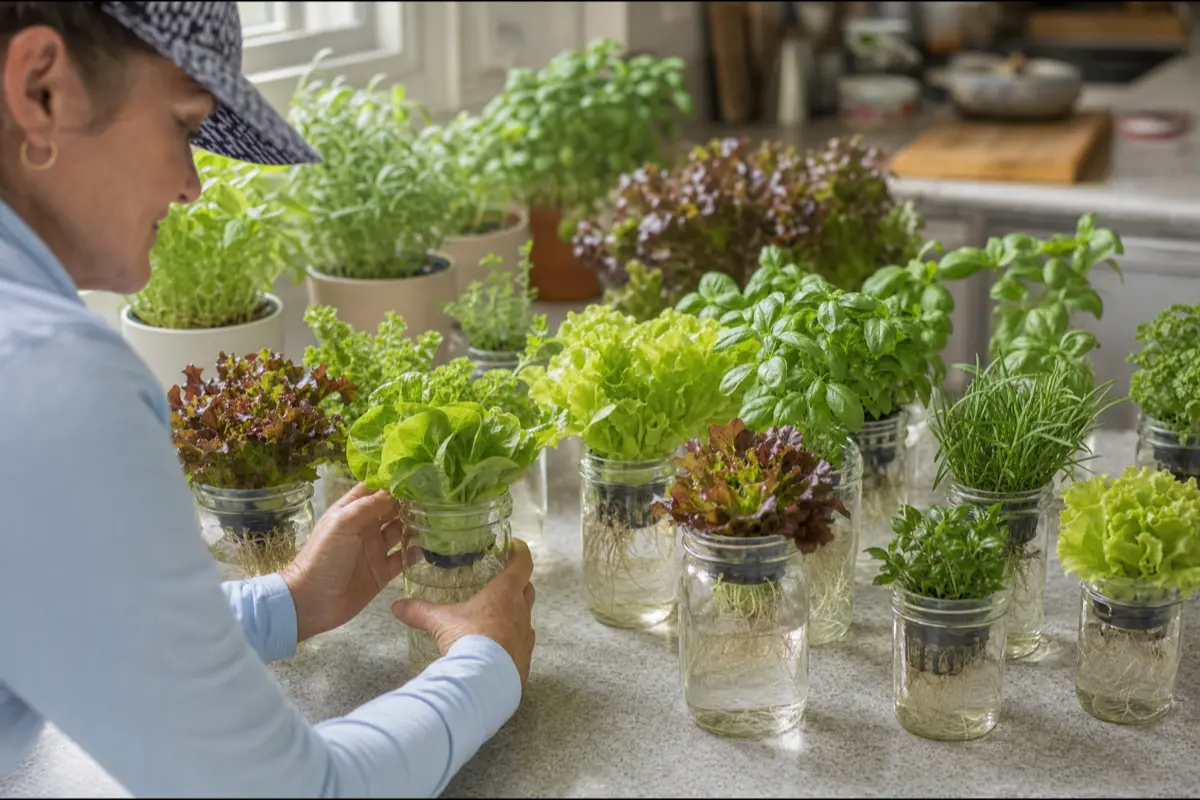
Assembly
- Drill or cut a hole in the mason jar lid to fit the 2-inch net pot snugly. The net pot should extend about 2.5 cm (1 inch) below the lid surface.
- Wrap the jar completely in aluminum foil. Light hitting the nutrient solution causes algae — block it all.
- Mix nutrient solution. Fill the jar with room-temperature water, leaving 2.5 cm headspace. Add nutrients at half the manufacturer's recommended concentration. The UF/IFAS Extension recommends targeting an EC of approximately 1.25 mS/cm for lettuce.
- Adjust pH to 5.5–6.0 using pH Down. Always adjust after adding nutrients, not before.
- Prepare the seedling. Soak a rockwool cube in pH-adjusted water for 30 minutes, place 2–3 lettuce seeds on top, and set the cube into the net pot. Fill around it with clay pebbles.
- Assemble. Place the net pot in the lid, set the lid on the jar. The net pot's bottom should just touch the solution surface.
- Place in light. South-facing windowsill (6+ hours direct sun) or a grow light at 14–16 hours per day, 15–30 cm from the plant.
That is it. Check pH once or twice per week. Harvest in 5–7 weeks.
For the complete step-by-step with troubleshooting detail, see our Kratky method guide.
Wick System Variation
To build a wick system instead:
- Use two containers — a lower reservoir and an upper plant pot with drainage holes.
- Thread 2–3 cotton or nylon wicks through the drainage holes, extending 10–15 cm into each container.
- Fill the upper pot with a 50/50 mix of perlite and vermiculite.
- Fill the reservoir with nutrient solution (same mixing and pH process as above).
- Plant seedlings into the medium and let the wicks do the work.
Maintenance difference: Wick systems need reservoir refills every 3–7 days depending on plant size and ambient temperature. Flush the medium with plain pH-adjusted water every 2–3 weeks to prevent salt buildup.
Advanced Passive System Modifications
Once you have a single Kratky jar or wick pot running, these modifications let you scale without switching to active systems.
Multi-Plant Kratky Tote
A 27-liter (7-gallon) opaque storage tote replaces individual mason jars for growing 4–6 lettuce heads simultaneously. Cut 2-inch holes in the lid at 15 cm (6-inch) spacing. The shared reservoir means more nutrient volume per plant, which extends the growing window and buffers against pH swings — a larger volume of solution resists pH drift longer than a small jar.
Setup considerations:
- Use an opaque tote — never clear plastic, even wrapped in foil (seams leak light)
- Minimum 4 liters of solution per plant site for lettuce
- Stagger planting by 1–2 weeks so plants are at different stages and don't deplete the reservoir simultaneously
- Monitor EC at the 50% consumption mark (when solution drops to half the original volume) — if EC exceeds 2.5 mS/cm, dilute with pH-adjusted water
Float Valve Auto-Fill
A passive auto-fill system uses a float valve (the same mechanism as a toilet tank) to maintain a consistent solution level in a Kratky tote or wick reservoir. This is still pump-free — gravity delivers solution from an elevated supply container through a float-controlled inlet.
This modification is particularly useful for:
- Multi-plant totes where manual checking is impractical
- Summer growing when evaporation accelerates solution loss
- Wick systems that empty faster in hot, dry conditions
Critical rule: In Kratky systems, set the float valve to maintain the solution level below the air root zone. If the float refills above adapted air roots, you negate the Kratky air gap principle and risk root rot.
LECA Semi-Hydro Nutrient Rotation
For long-term houseplant care in LECA, rotating between nutrient solution and plain flush water prevents the salt accumulation that is the primary failure mode of semi-hydro systems.
Rotation protocol:
- Fill reservoir with quarter-strength nutrient solution (EC 0.4–0.6 mS/cm)
- After 2 reservoir cycles (approximately 10–20 days), flush with plain pH-adjusted water for one cycle
- Every 4–6 weeks, remove the plant, soak LECA in plain water for 30 minutes, rinse, and reset
- Monitor for white mineral crust on the LECA surface — this indicates the flush frequency needs to increase
This rotation mirrors what rain does for outdoor potted plants and prevents the gradual EC creep that causes brown leaf tips in sensitive species like calatheas and ferns.
Maintenance and Troubleshooting
Passive systems are low-maintenance, but not zero-maintenance. Here are the most common issues across all four methods.
| Problem | Cause | Fix |
|---|---|---|
| Algae (green slime) | Light reaching the nutrient solution | Wrap containers in foil; seal gaps around net pots and lids |
| Root rot (brown, mushy roots) | Air roots submerged (Kratky) or waterlogged medium (wick/LECA) | Never refill above air roots; ensure proper drainage in wick and LECA systems |
| Salt buildup on medium surface | Evaporation concentrating minerals (wick and LECA) | Flush with plain pH-adjusted water every 2–3 weeks |
| pH climbing | Normal ion exchange as plants absorb nitrates | Check 1–2x/week; adjust with pH Down. See our pH and EC guide |
| Yellowing lower leaves | pH out of range or nutrient depletion | Check pH first (most common cause); if pH is correct, replace or supplement solution |
| Crispy brown leaf tips | Nutrient concentration too high | Start at half-strength; dilute current solution. See nutrient burn signs |
| Wick not drawing solution | Wick dried out or clogged with salts | Replace wick; pre-soak new wicks before use; use salt-resistant synthetic wicks |
pH and EC Monitoring
Passive systems are less forgiving of pH drift than active ones because there is no circulation to mix the solution. In a Kratky jar, pH tends to climb as the plant absorbs nitrate ions and releases hydroxyl ions. Checking once or twice per week and correcting back to 5.5–6.5 prevents most nutrient uptake problems.
EC (electrical conductivity) naturally rises in passive systems as the plant consumes water faster than it consumes minerals. Starting at half-strength nutrients accounts for this concentration effect.
Advanced Troubleshooting Protocols
The basic troubleshooting table covers common issues. These protocols handle the less obvious problems that develop over longer growing cycles or in multi-plant setups.
Root Health Diagnostic
Root color is the fastest indicator of system health in passive hydroponics. Check roots weekly in Kratky and LECA systems.
| Root Appearance | Status | Action |
|---|---|---|
| White, firm, fuzzy root hairs | Healthy | No action needed |
| White to light tan, no fuzz | Normal aging | Monitor — acceptable in older roots |
| Tan to light brown, slightly soft | Early stress | Check pH (likely >6.5) and EC (likely >2.5 mS/cm); adjust solution |
| Dark brown, mushy, foul odor | Root rot (anaerobic) | Remove affected roots with sterile scissors; lower solution level to restore air gap; add fresh solution at half strength |
| Slimy green coating on roots | Algae colonization | Light is reaching the root zone — seal all gaps; wipe roots gently; replace solution |
Recovery from root rot in Kratky systems:
- Remove the net pot and trim all brown, mushy roots with sterilized scissors.
- Rinse remaining roots in pH-adjusted water (5.5–6.0).
- Refill the container with fresh solution at half the previous EC.
- Set the solution level so only the bottom 2–3 cm of healthy roots are submerged — leave maximum air gap.
- Monitor daily for 5–7 days. New white root growth indicates recovery.
pH Drift Correction by System Type
Each passive method has a characteristic pH drift pattern. Understanding the pattern helps you correct proactively rather than reactively.
| System | Typical Drift | Why | Correction Frequency |
|---|---|---|---|
| Kratky | Rises 0.3–0.5 per week | Nitrate uptake releases OH⁻ ions into static solution | Check 2x/week; correct with pH Down |
| Wick | Rises 0.2–0.4 per week | Same mechanism but buffered by growing medium | Check 1–2x/week |
| LECA semi-hydro | Rises 0.5–0.8 per week | LECA is slightly alkaline and raises pH on its own | Check 2x/week; soak new LECA in pH 5.0 water for 24h before use |
| Hempy bucket | Stable to slight rise | Top-feeding with fresh solution resets pH regularly | Check at each feeding |
Pro tip: If pH climbs above 7.0 in any system, do not attempt to crash it back to 5.5 in one adjustment. Large pH swings stress roots more than gradual drift. Correct in steps of 0.5 or less, spacing adjustments 12–24 hours apart.
Seasonal Adjustment Guide
Passive systems are more sensitive to ambient temperature changes than active systems because there is no circulation to distribute heat and no chiller to counteract it.
| Season | Key Risk | Adjustment |
|---|---|---|
| Summer (>27°C ambient) | Solution temperature rises, dissolved oxygen drops, pathogen risk increases | Move containers away from windows; use light-colored or insulated containers; reduce EC by 20% to offset concentration from higher evaporation |
| Winter (<15°C ambient) | Nutrient uptake slows, root growth stalls | Move to warmer location; use a seedling heat mat under the reservoir (not over 24°C solution temp); reduce feeding frequency in wick and hempy systems |
| Spring/Fall | Rapid temperature swings between day and night | Monitor pH more frequently — temperature swings accelerate pH drift; maintain stable container placement |
Frequently Asked Questions
Can I grow without any nutrients — just water? No. Plain water lacks the 14 essential mineral elements plants need. Hydroponic nutrients (sold as liquid or dry formulations) replace what soil would normally provide. Without them, plants yellow and stop growing within 1–2 weeks.
Do passive systems produce less than active systems? In some cases, yes. Active aeration accelerates root development and nutrient uptake, and circulating systems generally produce higher yields for the same crop and timeframe. However, results vary by crop and fertilizer type — a 2024 study in Frontiers in Plant Science found that substrate-based systems actually outperformed liquid culture for organic lettuce. For herbs and leafy greens with conventional nutrients, the difference is often small — and passive systems cost a fraction of active setups to build and run.
How often do I need to change the solution? In Kratky systems, you typically do not change it — the plant consumes the full volume by harvest. In wick and LECA systems, replace the reservoir solution every 2–3 weeks to prevent mineral imbalances. Hempy buckets get fresh solution with each top-feed, so buildup is less of a concern.
Can I use passive hydroponics outdoors? Yes, with precautions. Direct sunlight can heat solution well above the recommended maximum of 24°C (75°F). Above this threshold, dissolved oxygen drops significantly — from approximately 9.1 mg/L at 20°C to 7.6 mg/L at 30°C — which stresses roots and promotes pathogen growth. Use opaque, light-colored containers and keep them shaded. Rain can also dilute open systems — use lids or covers.
What is the cheapest way to start? A Kratky mason jar with lettuce. If you already own a jar, your only costs are nutrients ($10–15), a pH kit ($8–15), and seeds ($2–3). Net pots and clay pebbles add $5–10. Under $20 total for your first harvest.
Key Takeaways
- Passive hydroponics eliminates pumps, electricity, and moving parts. Four proven methods cover everything from a single lettuce jar to bucket-grown tomatoes.
- Kratky is the simplest: static solution + air gap. Validated by Dr. Bernard Kratky's peer-reviewed research at the University of Hawaii.
- Wick systems use capillary action through absorbent strips. Best for small herbs and classroom setups.
- Semi-hydro (LECA) wicks through porous clay aggregate. Ideal for houseplants and orchids.
- Hempy buckets create a permanent mini-reservoir in an inert medium. Handles larger plants like peppers and determinate tomatoes.
- Start with a Kratky mason jar and lettuce. Total cost under $20, harvest in 5–7 weeks, no equipment failures possible.
- Passive systems favor short-cycle, shallow-rooted plants. For large fruiting crops, consider upgrading to an active system like NFT.
Ready to start? Explore our plant database for crop-specific growing parameters, or calculate your nutrient mix for exact dosing.